If you are running a solar installation company, you already know that the competition is fierce. Homeowners are bombarded with ads, door-knockers, and cold calls promising to eliminate their electric bills. To stand out, many solar owners turn to social media, setting up a Facebook business page, posting a few photos of recent installs, and waiting for the leads to roll in. While having an active social media presence is absolutely necessary for modern marketing, relying solely on a Facebook page to run a high-ticket business is a massive, costly mistake.
Your solar company needs a dedicated, high-converting website. A real website acts as the central hub of your entire digital marketing strategy. It is an asset that you own completely, designed specifically to capture attention, build unshakable trust, and convert curious homeowners into exclusive, high-quality appointments. Here is why stepping away from the social media timeline and investing in a professional website is the most critical move for your solar business.
1. Your Website is a Sales Rep That Works 24/7
The biggest limitation of a Facebook page is its chronological nature. When you post a great piece of content explaining the Federal Solar Tax Credit or showing off a beautiful ground mount system, it gets pushed down the feed within hours. Within a few days, it is practically invisible. Unless a prospect is willing to scroll endlessly through your timeline, your best sales pitches are lost to time.
A website, on the other hand, is a structured, permanent, and tireless sales machine. It does not clock out at 5:00 PM, it never takes a sick day, and it does not demand a commission. When a homeowner opens their mail at 9:00 PM, sees an outrageously high summer utility bill, and turns to Google for a solution, your Facebook page is unlikely to rank at the top of the search results. But a well-optimized, local-SEO-focused website will.
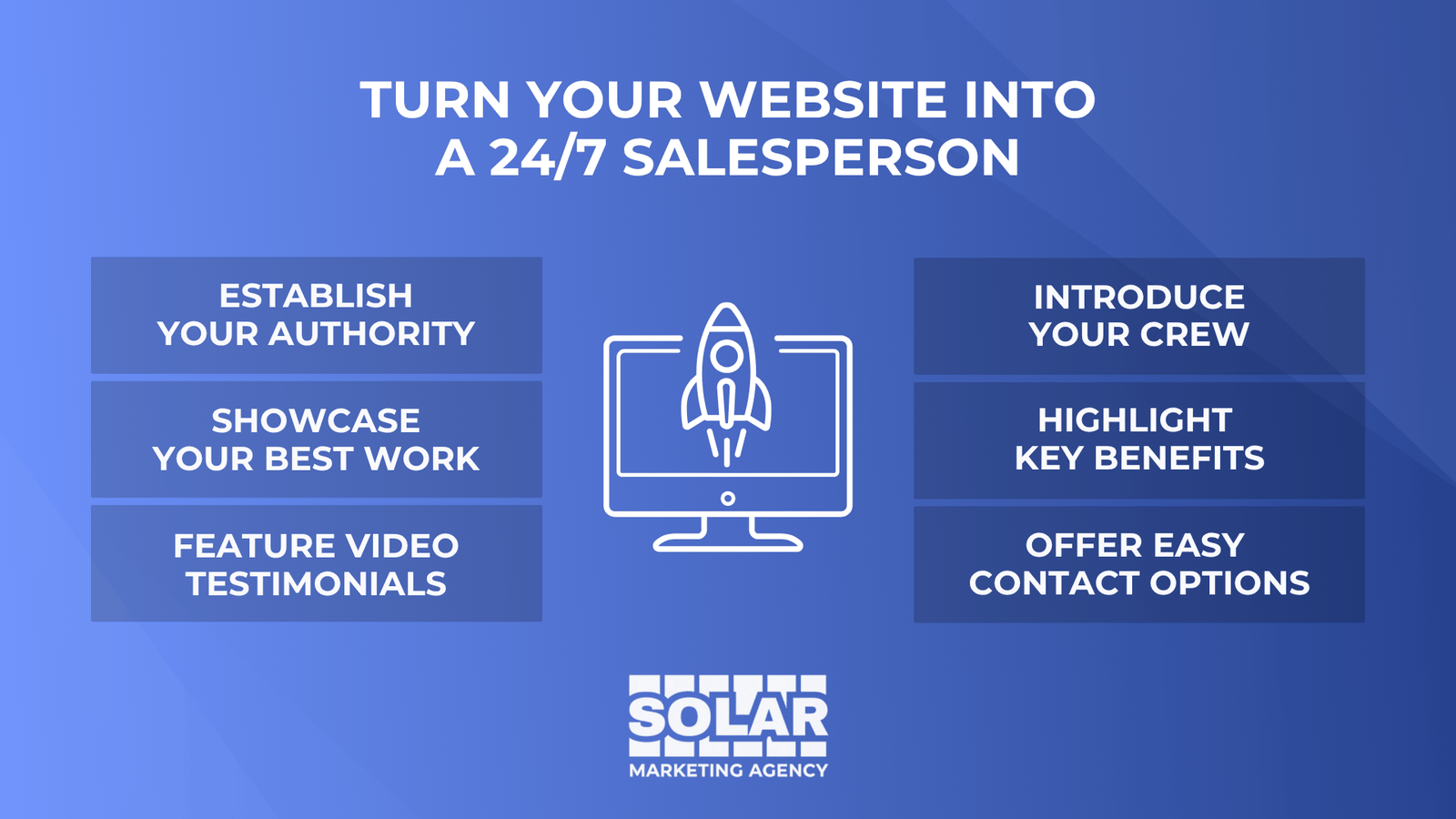
2. Build Instant Authority with Clear Proof of Licensing and Certifications
The solar industry has an unfortunate reputation problem. Because of the boom in demand, the market has seen an influx of “fly-by-night” sales organizations and aggressive marketing bros who sell the system, outsource the labor to the cheapest bidder, and disappear when the roof starts leaking. Homeowners are inherently skeptical and incredibly protective of their property.
When a prospect is comparing your quote against a competitor’s, they will inevitably look up both companies. If your competitor has a slick website displaying official badges, Better Business Bureau accreditation, and clear licensing, and you only have a Facebook page with a few memes and iPhone photos, you will lose that deal. A website establishes you as a deeply rooted, highly professional local business that is here to stay.
3. Showcase Your Best Work Through Portfolios and Video Testimonials
Social media compresses images and buries your past work. If a homeowner wants to see what your conduit runs look like, or if they want to see an installation on a Spanish tile roof similar to theirs, they will have a hard time finding it on Facebook. A dedicated website allows you to curate a high-resolution, beautifully organized project portfolio.
Furthermore, a website is the perfect home for your most powerful sales tool: video testimonials. Written reviews are great, but a professionally filmed or even a genuine smartphone video of a happy homeowner holding their $12 utility bill speaks volumes. You can dedicate an entire page to these success stories, pairing the video with a case study detailing the system size, the estimated 25-year savings, and the environmental impact. This kind of structured social proof is impossible to replicate on a social media feed.
4. Put a Face to the Name with Professional Crew Photos
People do not buy from faceless corporations; they buy from people they like and trust. One of the biggest anxieties a homeowner has about going solar is the idea of a crew of strangers crawling around on their roof for two days. They worry about property damage, professionalism, and safety. You can alleviate this fear long before you even step foot in their home by utilizing your website.
Include short bios for your core team members. Highlight their years of experience in the industry, their local ties to the community, and their dedication to quality craftsmanship. When a homeowner can look at your website and see the smiling, professional faces of the exact people who will be showing up at their house, you instantly humanize your brand and drastically lower their defensive barriers.
5. Highlight the True Benefits and Simplify Complex Financing
Solar is a complex product. You are not just selling panels; you are selling long-term financial security, tax strategy, and energy independence. The average consumer does not fully understand how the Federal Investment Tax Credit (ITC) works, what SRECs (Solar Renewable Energy Certificates) are, or the difference between a PPA, a lease, and cash ownership.
A Facebook post simply does not offer the bandwidth to educate your customer properly. A real website gives you the real estate to break down these complex topics into easily digestible sections. You can dedicate entire pages to explaining local state incentives and utility company rebates. You can have a clear, easy-to-read “Financing Options” page that explains the benefits of $0-down solar loans versus cash purchases, complete with visual graphs showing the trajectory of utility rate hikes versus fixed solar payments.
6. Funneling Leads with Effortless and Flexible Contact Options
The ultimate goal of any digital marketing asset is to generate a lead. Facebook’s native lead generation tools and messaging systems can be clunky, and many older homeowners, who make up a large portion of the solar demographic, prefer not to communicate via Facebook Messenger.
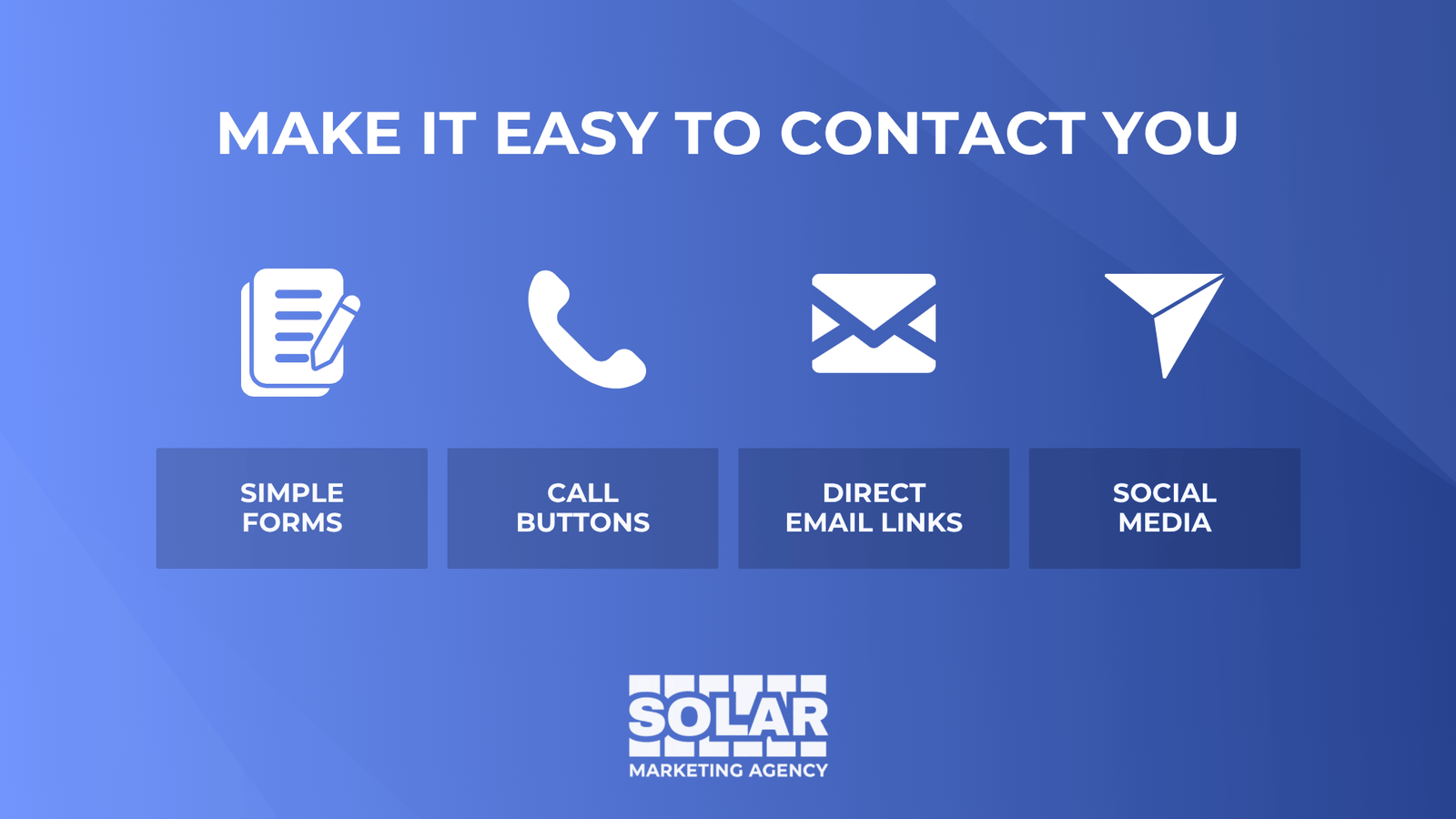
A dedicated website gives you total control over the conversion process, allowing you to cater to every type of communication preference. You can implement multiple, low-friction ways for a homeowner to get in touch:
- Simple, High-Converting Forms: Place a clean, easy-to-use “Get a Free Quote” form strategically across your site. Ask only for the essentials (Name, Address, Average Monthly Bill, Phone, Email) to keep the barrier to entry low.
- Click-to-Call Functionality: Over half of your web traffic will come from mobile devices. Ensure your phone number is locked into the header of your website so that with one tap, they are dialing your office.
- Direct Email Links: For the analytical buyer who wants to write out a detailed inquiry, provide a direct email link.
- Social Integration: For those who do want to check out your social media, include clear links to your Facebook, Instagram, and LinkedIn pages, creating a cohesive digital ecosystem.
Conclusion
Running a solar business is about building trust, demonstrating authority, and making the complex process of going solar feel simple and secure for the homeowner. While a Facebook page is a great tool for staying social and running top-of-funnel ads, it is not a robust foundation for a high-ticket business.
Your solar company needs a real website to act as your 24/7 digital storefront. It is the only place on the internet where you have total control over the narrative. By showcasing your authentic crew, displaying undeniable proof of your licensing, organizing your best project portfolios, educating the consumer on financial benefits, and providing seamless ways to contact you, your website transforms from a digital brochure into your most valuable sales asset.