You’ve invested heavily in a fast, modern website. Your landing pages are pristine, and your on-page SEO is perfectly optimized for keywords like “solar panel installation” and “commercial solar contractors.” But if your phone still isn’t ringing and competitors keep outranking you, you are missing a critical piece of the puzzle. Search engines need more than a well-designed website to trust you, they need proof from the outside world.
Off-page SEO covers all the actions taken outside of your own website that impact your rankings. For solar company owners, this is the dividing line between being a hidden local secret and dominating your regional market. It is about building authority, trust, and relevance at scale.
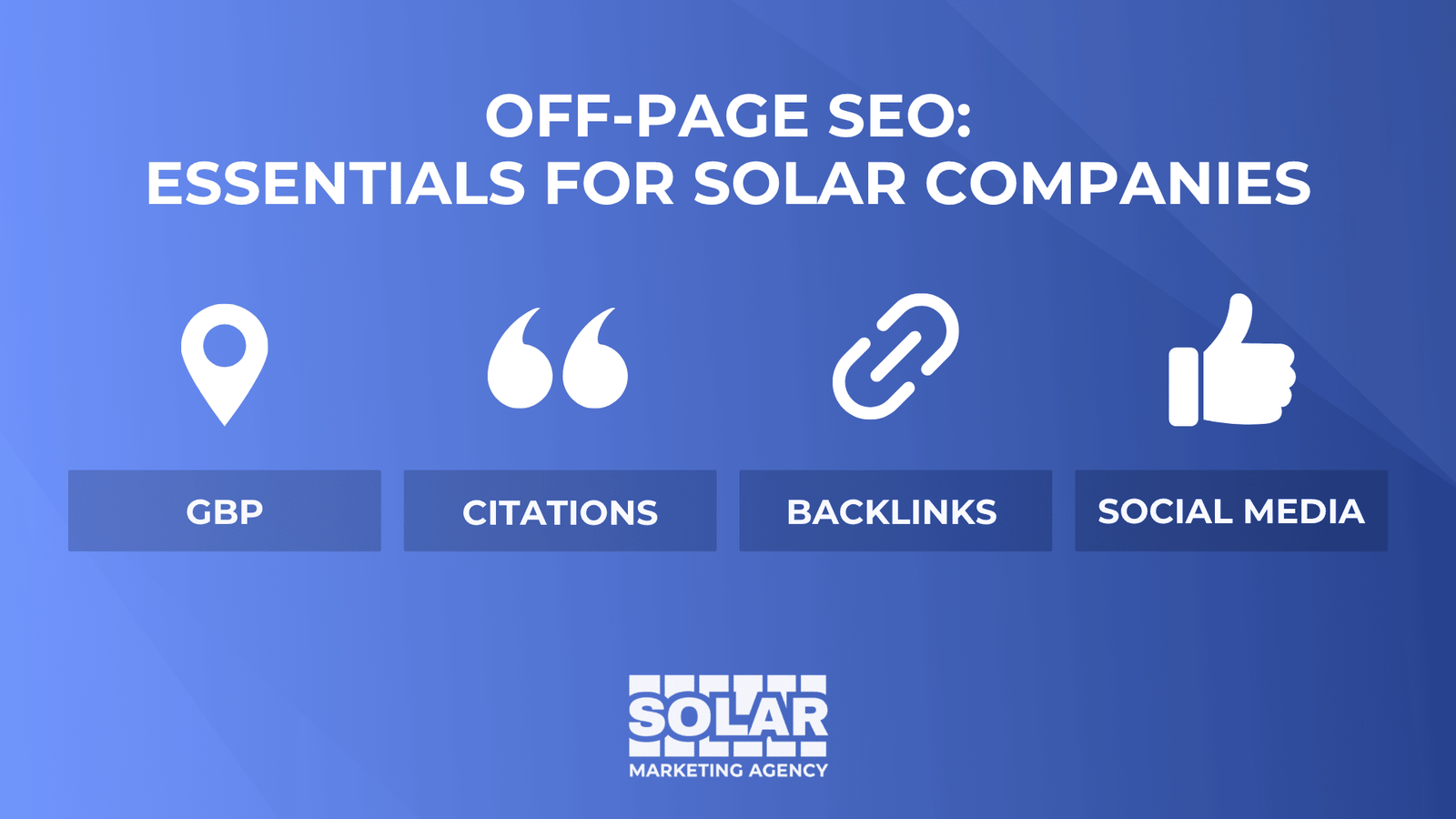
In a high-ticket industry like renewable energy, homeowners need to trust you completely before signing a contract. Let’s break down the ultimate off-page SEO strategy and the five critical elements you need to implement to drive sustainable growth.
Google Business Profile: Your Local Powerhouse
While technically a Google property, managing your Google Business Profile (GBP) is an off-page activity because it happens entirely off your website. It is the absolute core of your local lead generation.
Optimizing for the Local Pack
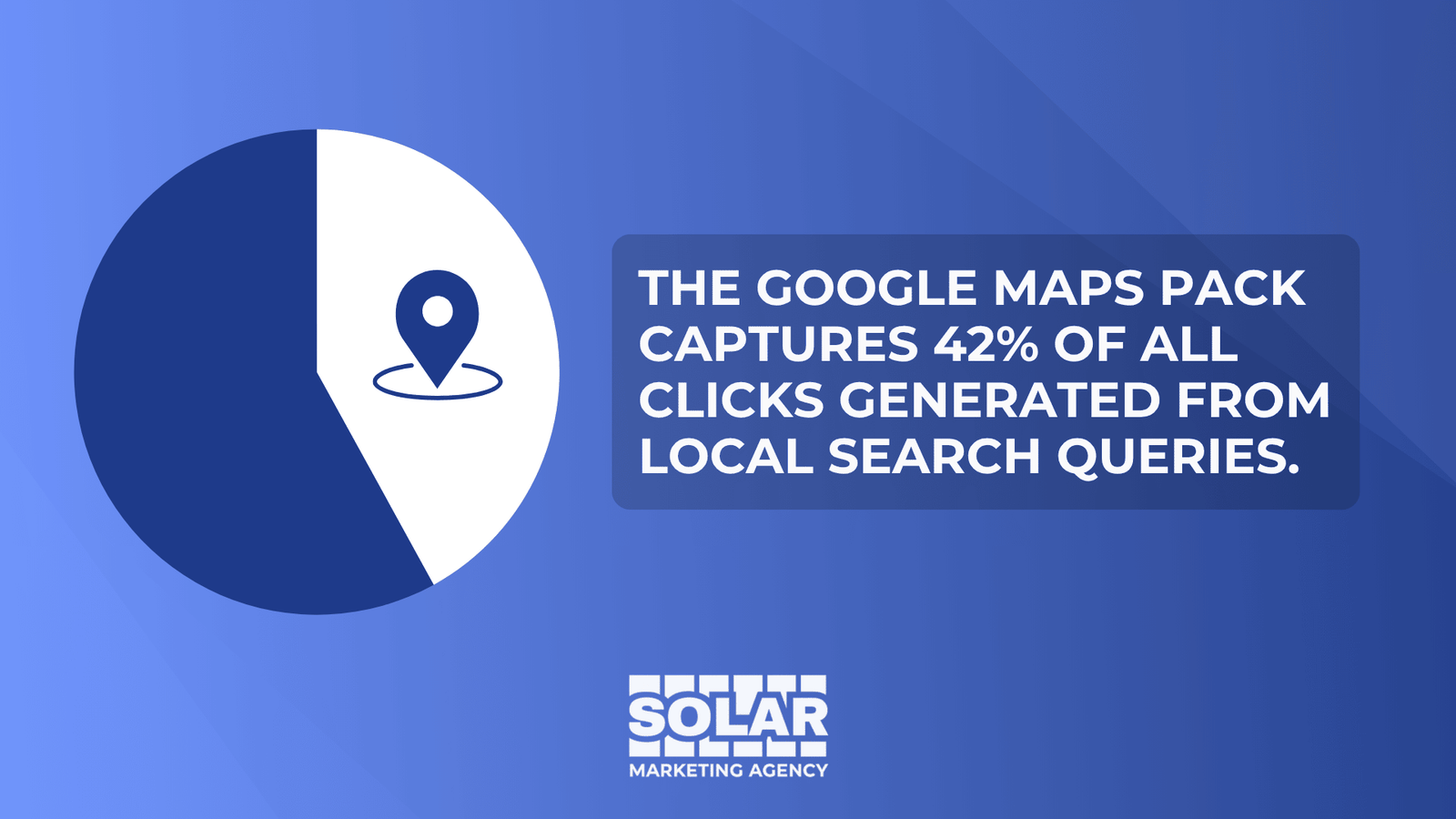
When a homeowner searches for local installers, Google’s Local Pack is the first thing they see. Earning a spot in those top three positions requires a flawlessly filled-out profile. This means accurately selecting your primary and secondary categories, outlining exact service areas, and keeping business hours hyper-accurate.
The ROI of Customer Reviews
Reviews are the lifeblood of solar sales. A steady stream of positive, detailed reviews signals to Google that you are a highly-rated, legitimate contractor. Make it a strict company policy to request a review after every successful PTO (Permission to Operate), and respond to all of them using local keywords.
Utilizing Posts and Q&A
Treat your GBP like an active social media feed. Post weekly updates about new tax incentives, net metering changes, or photos of recent local installations. Additionally, seed the Q&A section with common questions homeowners ask during consultations to pre-qualify leads right on the search results page.
NAP Consistency and Citations
NAP stands for Name, Address, and Phone number. Search engines crawl the web looking for these mentions, known as citations, to verify that you are a real, operational business.
The Golden Rule of Consistency
In local SEO, absolute consistency is non-negotiable. If your website says “Apex Solar Solutions, LLC” at “123 Energy Street,” but your Yelp profile says “Apex Solar” at “123 Energy St.”, that discrepancy confuses search algorithms. Fragmented data actively harms your local rankings.
Dominating Major Aggregators
To build a robust citation profile, start with the broad, high-authority directories. Claim and fully optimize your profiles on platforms like Yelp, the Better Business Bureau (BBB), Angi, and YellowPages. These establish the baseline of your digital footprint.
Leveraging Niche and Local Directories
Once the basics are covered, pivot to industry-specific platforms. Listings on SolarReviews, EnergySage, and local green energy directories carry massive weight. Pair these with local citations from your Chamber of Commerce or city contractor portals to send undeniable local trust signals to Google.
Social Media: Amplifying Your Solar Brand
While SEOs debate the direct algorithmic weight of social media, it remains a foundational pillar of off-page strategy. It generates awareness, drives referral traffic, and establishes essential social proof.
Visual Proof of Your Expertise
Solar is an incredibly visual, high-consideration industry. Homeowners want to see what panels look like on their roof style before committing $30,000 to a project. Use Instagram and Facebook to showcase high-quality drone shots, time-lapse installation videos, and clean conduit runs.
Distributing Educational Content
Social media is the perfect distribution engine for your website’s content. When you publish a guide on “Claiming the Federal Solar Tax Credit,” sharing it across your social channels drives immediate, targeted traffic back to your site. This active engagement tells search engines your content is valuable.
Generating Brand Authority
When other local businesses or homeowners share your posts, it amplifies your reach and inevitably leads to more branded searches on Google. When people actively type your specific solar company’s name into the search bar, Google registers that as a massive indicator of brand authority.
Backlinks: The Currency of Search Engine Authority
To outrank massive, national solar corporations in your local market, you need a strong backlink profile. A backlink is a link from another website pointing back to yours, acting as a digital vote of confidence.
Quality Over Quantity
In the eyes of search engines, not all links are created equal. A single link from a respected local university discussing renewable energy is worth infinitely more than hundreds of spammy directory links. You want links from authoritative, relevant sources.
Leveraging Manufacturer Relationships
Start with the low-hanging fruit by leaning on your suppliers. If you are a certified installer for Tier 1 brands like Enphase, Tesla, or REC, ensure your company is listed and linked on their official “Find an Installer” directories.
Building Local Partnerships
Partner with businesses that share your customer base but don’t compete with you, like local roofers, HVAC technicians, or electricians. Exchanging links on a “Trusted Local Partners” page provides a mutually beneficial local SEO boost. Sponsoring local events or Little League teams also frequently results in high-quality local links.
Press Releases: Generating Buzz and High-Quality Links
Many contractors think press releases are outdated. In reality, strategic digital PR is one of the fastest ways to generate buzz and secure high-domain authority backlinks from trusted news sites.
The Modern Power of Digital PR
Digital PR involves distributing news about your business to media outlets and journalists. When your release is syndicated across local network affiliates (like a local FOX or NBC station website), you rapidly accumulate authoritative links pointing directly to your website.
Crafting Newsworthy Stories
Journalists won’t publish a release just because you want better SEO; you need a real story. Craft releases around major milestones: opening a new office, completing a massive commercial array, partnering with a local charity, or launching a new whole-home battery backup service.
Benefiting from Brand Mentions
Even if a media outlet covers your story but forgets to include the direct link, you still win. The mere mention of your brand name in a positive, authoritative context, known as an unlinked brand mention, helps establish your entity authority in Google’s ecosystem.
Conclusion
Off-page SEO is not a one-time checklist; it is a long-term commitment to building your digital reputation. By meticulously managing your Google Business Profile, ensuring NAP consistency, dominating social media, earning authoritative backlinks, and leveraging digital PR, you send an undeniable signal to search engines.
When your website’s technical foundation and your off-page authority work together in perfect harmony, you stop chasing low-quality leads and start dominating the local search results.